
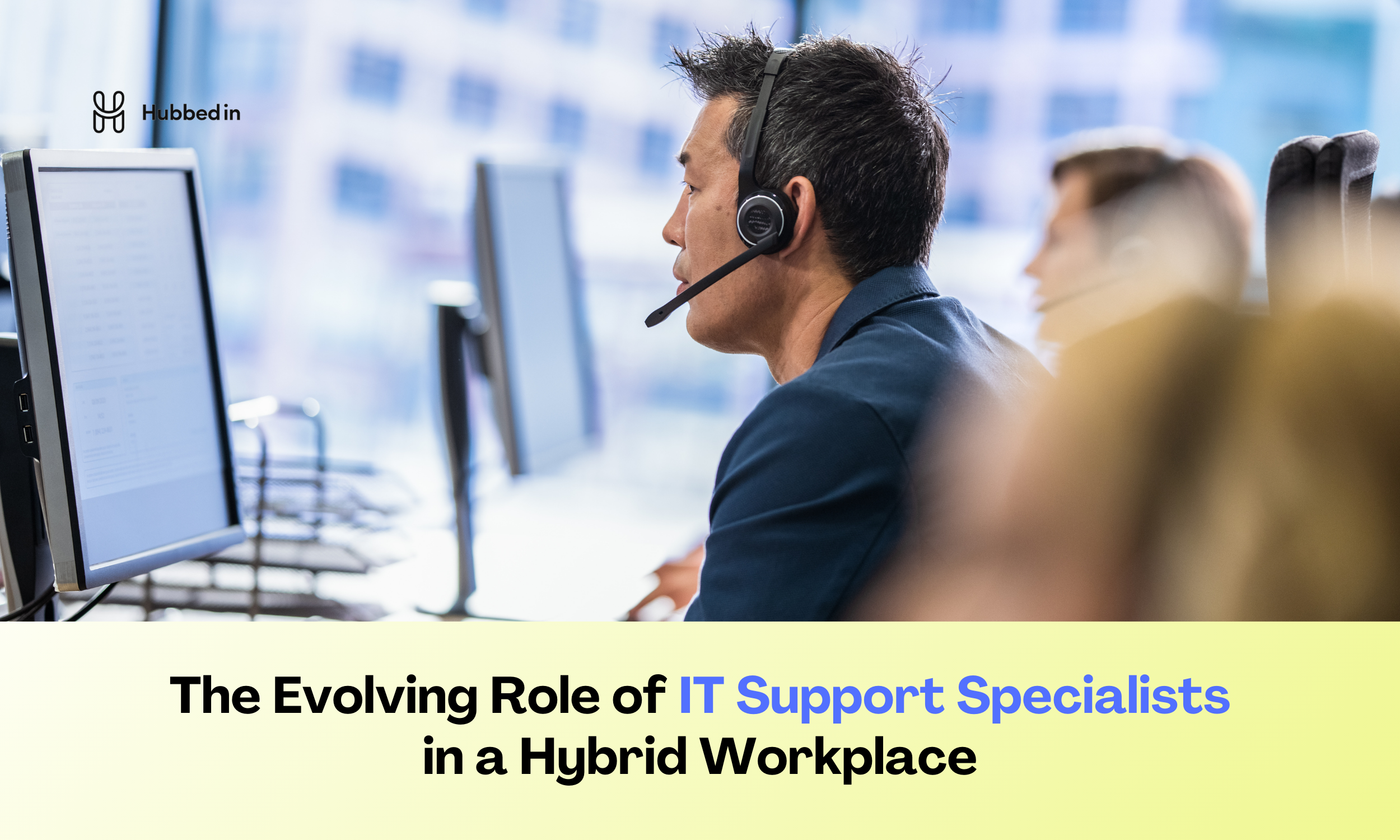
The rise of hybrid work has reshaped nearly every corporate function — but few roles have evolved as dramatically as that of the IT Support Specialist. Once known mainly for troubleshooting on-site hardware issues and assisting office-bound employees, today’s IT support professionals are responsible for managing distributed teams, securing remote networks, configuring cloud environments, maintaining device fleets, and enabling seamless collaboration across multiple platforms.
Hybrid work has introduced new complexities, new expectations, and new risks. Organizations now rely on IT support specialists not only to solve technical issues but also to build the digital infrastructure that keeps business operations running smoothly. In a world where uptime, connectivity, and cybersecurity are non-negotiable, IT support has become a strategic backbone rather than a reactive service.
This article breaks down the evolving responsibilities of IT support specialists in a hybrid workplace — exploring how their role has expanded, what skills now matter most, and how they enable organizations to operate securely and efficiently across dispersed environments.
- Supporting Distributed Teams Across Multiple Work Environments
- Managing Cloud-Based Systems and Digital Infrastructure
- Overseeing Device Management and Endpoint Security
- Ensuring Rapid Troubleshooting and Continuity Across Hybrid Environments
- Upholding Cybersecurity in a Borderless Workplace
Before hybrid work became the norm, IT support’s daily tasks were often centered around the physical office. They configured desktops, set up office networks, maintained conference room equipment, and responded to in-person support tickets. Today, the challenge is far more complex: supporting employees working from home, coworking spaces, remote locations, and office hubs — often switching between them weekly.
This requires IT support specialists to understand and manage a wide variety of environments. Remote employees may have different devices, different network conditions, and different levels of technical experience. Troubleshooting, therefore, must account for variables outside the company’s direct control, including home Wi-Fi performance, personal routers, and third-party peripherals.
The modern IT support specialist must also ensure seamless access to company tools regardless of location. VPN connectivity, single sign-on (SSO) errors, authentication challenges, cloud application outages, and device syncing issues have become part of the daily landscape of remote support. The ability to quickly diagnose and resolve these problems is essential to keeping distributed teams productive and aligned.
Organizations increasingly rely on IT support teams to coach employees through digital best practices, maintain communication platforms, and enhance digital literacy. This makes IT support specialists not just problem-solvers, but enablers of remote productivity and organizational resilience.
Managing Cloud-Based Systems and Digital InfrastructureHybrid work accelerated cloud adoption, and with it, the IT support function has expanded into the realm of cloud administration. Today, IT support specialists frequently manage cloud-based systems such as Office 365, Google Workspace, AWS, Azure, and countless SaaS tools.
Their responsibilities may include:
- Overseeing user access and permissions
- Managing cloud storage and backups
- Monitoring cloud service performance
- Handling application integrations
- Maintaining compliance and version control
- Supporting cloud-based communication tools
- Ensuring data synchronization across devices
Cloud environments require skills that go beyond traditional hardware support. IT support specialists must understand identity management systems, cloud security configurations, virtual machines, and distributed storage environments. They often work closely with cloud engineers and cybersecurity teams to maintain system stability and protect sensitive data.
As organizations adopt more automation and AI-powered tools, IT support teams are also expected to maintain these systems, troubleshoot machine-learning tools, and ensure compatibility across an expanding ecosystem of cloud applications. In a hybrid workplace, cloud literacy is no longer optional — it is foundational.
Overseeing Device Management and Endpoint SecurityHybrid work has increased the number of devices connected to company systems — laptops, tablets, mobile phones, webcams, headsets, and IoT devices across multiple sites. Managing these devices securely and efficiently requires a sophisticated approach to endpoint management.
IT support specialists now frequently use mobile device management (MDM) and endpoint security platforms to:
- Track device inventory and usage
- Push software updates remotely
- Enforce security policies across devices
- Encrypt sensitive data
- Manage device lifecycles
- Remotely lock or wipe lost devices
The shift from centralized hardware to distributed devices also means IT support teams must prepare for more variability. Different operating systems, BIOS configurations, patches, and connection types can all affect performance. Remote imaging, virtual desktop infrastructure (VDI), and remote monitoring tools help IT support teams manage these complexities, but require new technical skill sets.
Device management is no longer about fixing hardware — it is about safeguarding the organization.
Ensuring Rapid Troubleshooting and Continuity Across Hybrid EnvironmentsIn a hybrid setting, technical failures can halt productivity instantly. A broken VPN connection during a customer presentation, an authentication failure before a virtual meeting, or a malfunctioning collaboration tool can have major business consequences.
Modern IT support specialists must therefore excel in fast, accurate troubleshooting. This includes remote diagnostics, log analysis, performance monitoring, and identifying root causes across multiple layers — from user error to network failures to cloud-based outages.
Troubleshooting in hybrid environments also requires strong communication skills. Because remote employees cannot simply walk to the help desk, IT support teams rely on clear instructions, screen sharing, guided workflows, and step-by-step communication to resolve issues effectively.
More importantly, IT support teams are increasingly expected to prevent issues before they occur. Using analytics dashboards, monitoring tools, and automated alerts, they detect performance issues early, track common ticket patterns, and implement proactive measures such as automated updates, system patches, and security reinforcements.
This transition from reactive support to proactive operations is one of the most defining shifts in the IT field today.
Upholding Cybersecurity in a Borderless WorkplaceCybersecurity threats have risen in parallel with hybrid work. With employees working from multiple locations and using multiple devices, the attack surface has expanded dramatically. IT support specialists now play an essential role in protecting the organization from phishing attempts, malware intrusions, compromised credentials, and unsecured networks.
Their cybersecurity responsibilities may include:
- Enforcing multi-factor authentication (MFA)
- Managing password and identity systems
- Conducting security awareness training
- Monitoring suspicious device activity
- Ensuring compliance with data protection regulations
- Implementing endpoint and cloud security measures
- Auditing user access and permissions
Because employees often serve as the first line of defense — and sometimes the weakest link — IT support specialists must balance technical protection with user education. Cybersecurity is not just a technical function; it is a cultural one, and IT support professionals are deeply involved in shaping that culture.
Hybrid workplaces also require organizations to regularly revisit and strengthen their security protocols. IT support teams are frequently called upon to collaborate with cybersecurity analysts, network engineers, and compliance specialists to ensure that hybrid policies are up to date, robust, and scalable.
Conclusion: IT Support Specialists Are the Backbone of Hybrid WorkThe role of IT Support Specialists has transformed dramatically in the era of hybrid work. No longer limited to in-office troubleshooting, they now support distributed teams, secure cloud environments, manage diverse device ecosystems, and safeguard organizations from rising cybersecurity threats. Their technical insight and adaptability make them essential contributors to any modern, digitally enabled business.
If you’re ready to demonstrate your value in this expanding field, make sure your resume reflects the breadth of your skills and the impact you bring. Download the IT Support Specialist Resume Template to create a polished, professional resume that highlights your strengths and positions you for the next step in your IT career.
Don’t navigate your career journey alone—unlock expert support with our free AI-powered Career Tools Kit at CareerLab.