
When it comes to building a career, the challenge isn’t always about working hard. Often, it’s about working with direction. One of the most effective ways to give your career clarity is by setting goals — both short-term and long-term.
But here’s the tricky part: how do you set short-term goals that don’t distract from your bigger picture? And how do you define long-term goals when you’re still figuring things out? This article is here to help you understand both, and more importantly, how to find a rhythm between the two.
- What Are Short-Term Career Goals?
- What Are Long-Term Career Goals?
- Why Balancing Both Matters
- How to Align Short-Term and Long-Term Career Goals
- Common Pitfalls to Avoid
Short-term goals are those milestones you aim to hit in the near future — typically within the next few months to two years. These goals are often more tactical and focused on immediate skill-building, learning, or achievements.
Examples of short-term goals include:
- Completing a specific certification or online course
- Gaining internship experience in a certain industry
- Improving public speaking or presentation skills
- Expanding your professional network through events or LinkedIn
These goals can help you gain momentum, test new interests, and build the confidence that comes from seeing progress.
What Are Long-Term Career Goals?Long-term goals are broader and more aspirational. They usually span three to ten years (or more) and require consistent growth and strategic planning.
Examples of long-term career goals include:
- Becoming a team leader or department head
- Transitioning into a new field, such as UX design or policy analysis
- Starting your own business
- Working for a specific company or organization you admire
These goals help you stay grounded in your "why." They give you a sense of direction and help inform the decisions you make in the short term.
Why Balancing Both MattersFocusing too much on short-term goals can feel productive in the moment, but it might leave you without a clear direction. On the other hand, setting only long-term goals can feel overwhelming and disconnected from your daily life.
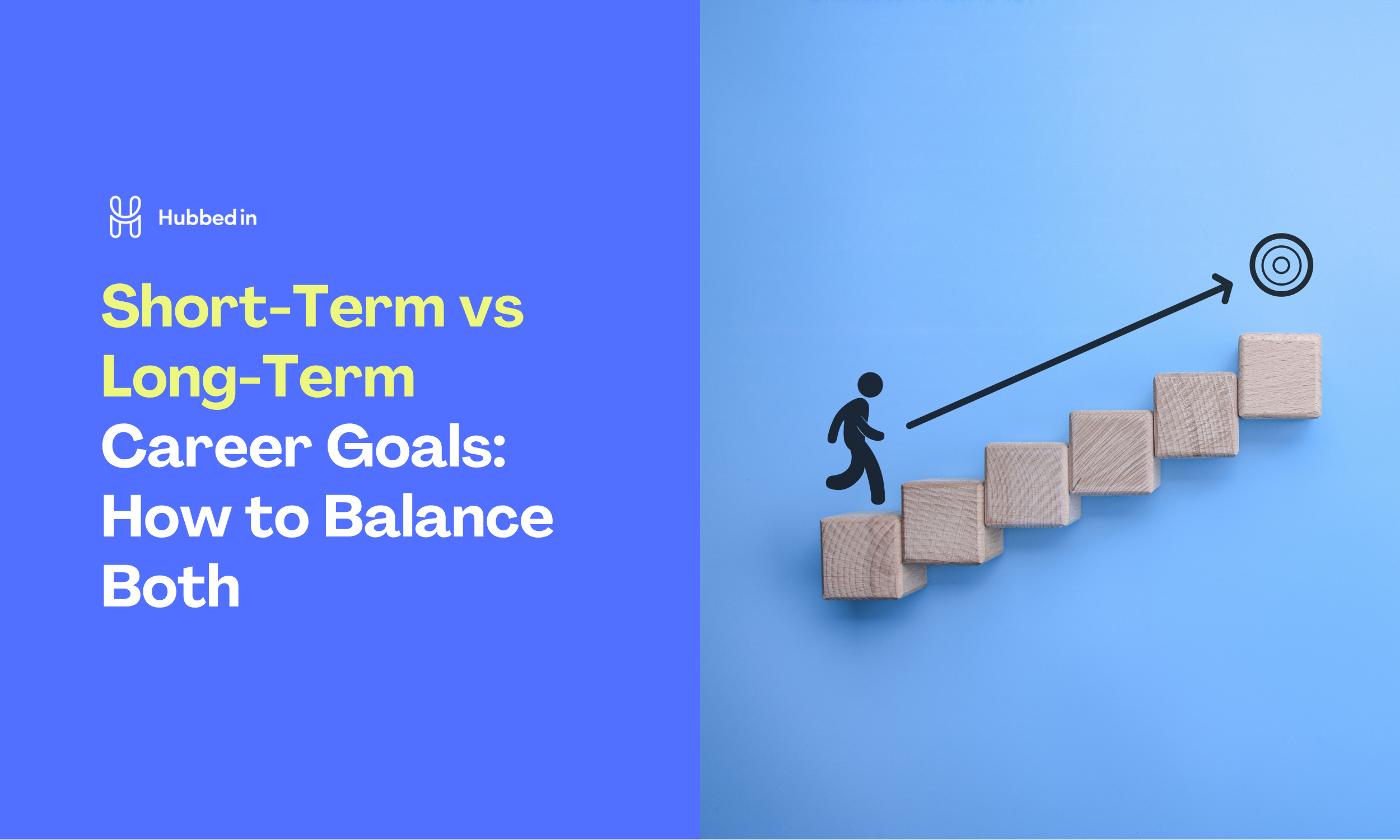
When you balance both, you build a path that’s both meaningful and actionable. Your short-term goals serve as stepping stones. Your long-term goals provide the bigger picture that keeps you motivated.
It’s not about choosing one over the other. It’s about making sure your short-term actions are aligned with your long-term vision.
How to Align Short-Term and Long-Term Career GoalsHere’s a simple step-by-step approach to bring both types of goals into harmony:
Start with Reflection
- What excites you professionally?
- What kind of work environment energizes you?
- Who are the people or professionals you admire, and why?
Define Your Long-Term Vision It doesn’t have to be exact. Think in terms of direction, not destination. Do you want to lead a team? Be an expert in your field? Work in a socially impactful organization?
Break It Down into Short-Term Wins Once you have a sense of the big picture, ask yourself:
- What skills do I need to get there?
- What projects or roles can I take on now that will build toward that goal?
Track and Adjust Career development isn’t a straight line. Check in with yourself regularly. Are your short-term efforts moving you closer to your long-term vision? If not, it’s okay to course-correct.
Common Pitfalls to Avoid- Setting goals based on what others expect instead of what you actually want
- Trying to do too much at once and burning out
- Waiting for the perfect plan before taking action
- Neglecting to write your goals down or track progress
Awareness is the first step toward avoiding these mistakes. A plan you can see and revise makes a big difference.
Start Building Your Career Development PlanWhether you’re a student exploring your options or a young professional trying to make sense of the next step, having both short- and long-term goals can guide your career with more purpose.
We’ve put together a Career Development Plan Template to help you map your goals clearly and practically. It includes space for your reflections, goal tracking, and action steps—so you can stop guessing and start growing.
Download the Career Development Plan Template now and take the first step toward building a career you’re proud of.
Don’t navigate your career journey alone—unlock expert support with our free AI-powered Career Tools Kit at CareerLab.