
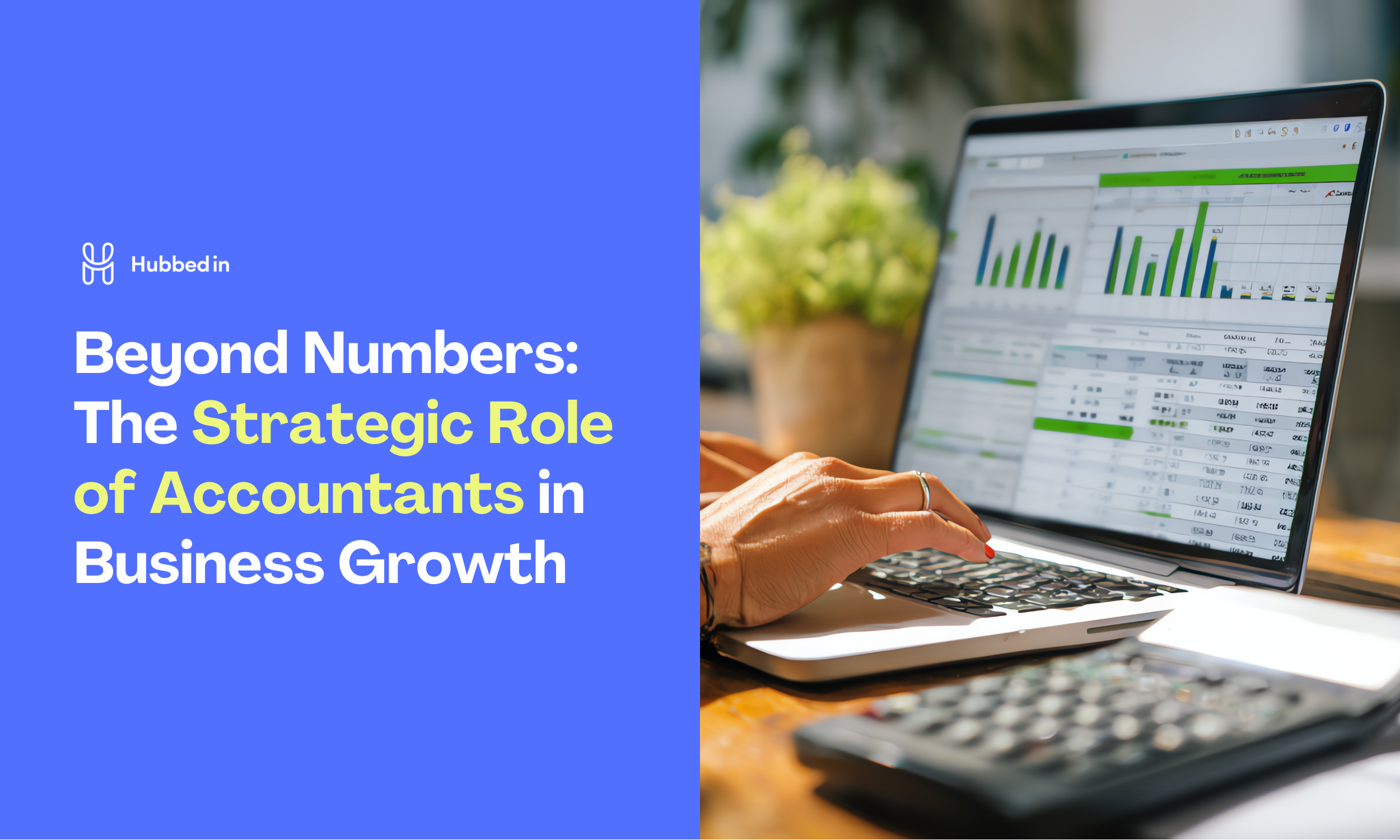
For decades, accountants were viewed primarily as financial recordkeepers — professionals responsible for accuracy, compliance, and reporting. But in 2025, the landscape has fundamentally shifted. Modern accountants are no longer confined to spreadsheets and balance sheets. They are now core strategic partners, driving business growth, forecasting future performance, and steering companies through fast-changing markets.
In a world defined by digital transformation, global competition, and data-heavy decision-making, accountants have become indispensable to long-term business strategy. Their ability to interpret financial data, evaluate risks, optimize resources, and identify opportunities makes them central to organizational success.
This article explores how accountants deliver value far beyond traditional tasks — and why their strategic role is now essential to sustainable business growth.
- From Financial Gatekeepers to Strategic Advisors
- The Accountant’s Role in Forecasting and Future Planning
- Supporting Innovation Through Financial Insights
- Strengthening Business Decisions With Data-Driven Insights
- Driving Sustainable Growth Through Risk and Compliance Management
The modern accountant’s role has expanded significantly. While traditional responsibilities like bookkeeping, financial reporting, and compliance remain critical, organizations now rely on accountants to provide strategic guidance that shapes long-term decisions.
This shift is driven by several trends: real-time financial data, advanced analytics tools, and the growing expectation for financial transparency.
Today’s accountants are expected to:
- Translate complex financial information into clear insights for executives
- Identify growth opportunities using financial trends and performance patterns
- Support scenario planning and strategic decision-making
- Evaluate the financial impacts of potential business initiatives
- Serve as trusted partners to both leadership and operational teams
In many companies, the accounting function has become a strategic brain center — informing not just financial decisions but operational, marketing, and expansion strategies as well.
The Accountant’s Role in Forecasting and Future PlanningModern accounting requires more than documenting what has already happened. It requires anticipating what comes next. Forecasting has become one of the most valuable responsibilities within the profession.
With access to real-time dashboards, automated reporting, and predictive analytics, accountants now provide forward-looking insights such as:
- Revenue projections based on historical patterns and current performance
- Market and operational risk assessments
- Cost-optimization strategies for improved margins
- Cash flow forecasts to support smart investment decisions
- Scenario simulations to plan for potential disruptions
Forecasting allows leaders to move from reactive to proactive, giving organizations a competitive edge. When accountants deliver accurate predictions, companies can allocate resources confidently, plan expansions, and mitigate emerging risks before they escalate.
Forecasting is no longer a bonus skill — it is foundational to the accountant’s strategic influence.
Supporting Innovation Through Financial InsightsInnovation often involves risk, uncertainty, and significant investment. Accountants play a key role in balancing creativity and financial responsibility by ensuring that innovative ideas are backed by sound financial analysis.
Accountants support innovation through:
- Cost-benefit analyses for new projects
- Evaluating return on investment (ROI) for digital transformation initiatives
- Analyzing market conditions to assess timing and feasibility
- Providing financial models for scaling new products or services
- Highlighting inefficiencies in existing processes that innovation can improve
This strategic involvement ensures that innovation is both imaginative and financially sustainable. Instead of being the department that “says no,” accountants have become enablers of growth — guiding organizations to pursue bold ideas while managing risk responsibly.
Strengthening Business Decisions With Data-Driven InsightsData has become one of the most valuable assets in the modern economy, and accountants are among the most skilled professionals in interpreting it. Using financial data, operational metrics, and industry benchmarks, accountants help leadership teams make smarter, faster decisions.
Some of the most impactful data-driven contributions include:
- Identifying trends in customer behavior or revenue performance
- Monitoring changes in cost structures to improve efficiency
- Analyzing departmental performance to guide resource allocation
- Uncovering hidden opportunities through profitability analysis
- Supporting mergers and acquisitions with detailed financial due diligence
The ability to connect financial data with broader business outcomes is what sets strategic accountants apart. They bring clarity to complexity, ensuring leaders have the information they need to move the business forward confidently.
Driving Sustainable Growth Through Risk and Compliance ManagementBusiness growth is not just about seizing opportunities — it’s also about navigating risks. Accountants play a crucial role in safeguarding the organization from financial, operational, and regulatory threats.
Their responsibilities include:
- Ensuring compliance with evolving industry regulations
- Managing internal controls to prevent fraud
- Identifying financial vulnerabilities before they escalate
- Monitoring market conditions that may impact revenue or supply chains
- Guiding companies through economic fluctuations and policy changes
A company cannot grow without stability — and accountants are the backbone of that stability. By proactively managing risks, they enable organizations to focus on expansion while maintaining financial integrity.
ConclusionThe accountant of 2025 is a strategist, analyst, advisor, and innovator. By combining deep financial knowledge with data-driven insight, they help businesses make smarter decisions, plan for the future, and pursue sustainable growth.
Organizations that elevate accountants from back-office staff to strategic partners unlock enormous potential. And for professionals in the field, embracing this expanded role opens the door to greater influence, leadership opportunities, and long-term career growth.
Accountants are no longer just the people behind the numbers. They are the people shaping the future of business.
Ready to highlight your own strategic impact? Download the Accounting Cover Letter Template to build a polished, growth-focused cover letter.
Don’t navigate your career journey alone—unlock expert support with our free AI-powered Career Tools Kit at CareerLab.