
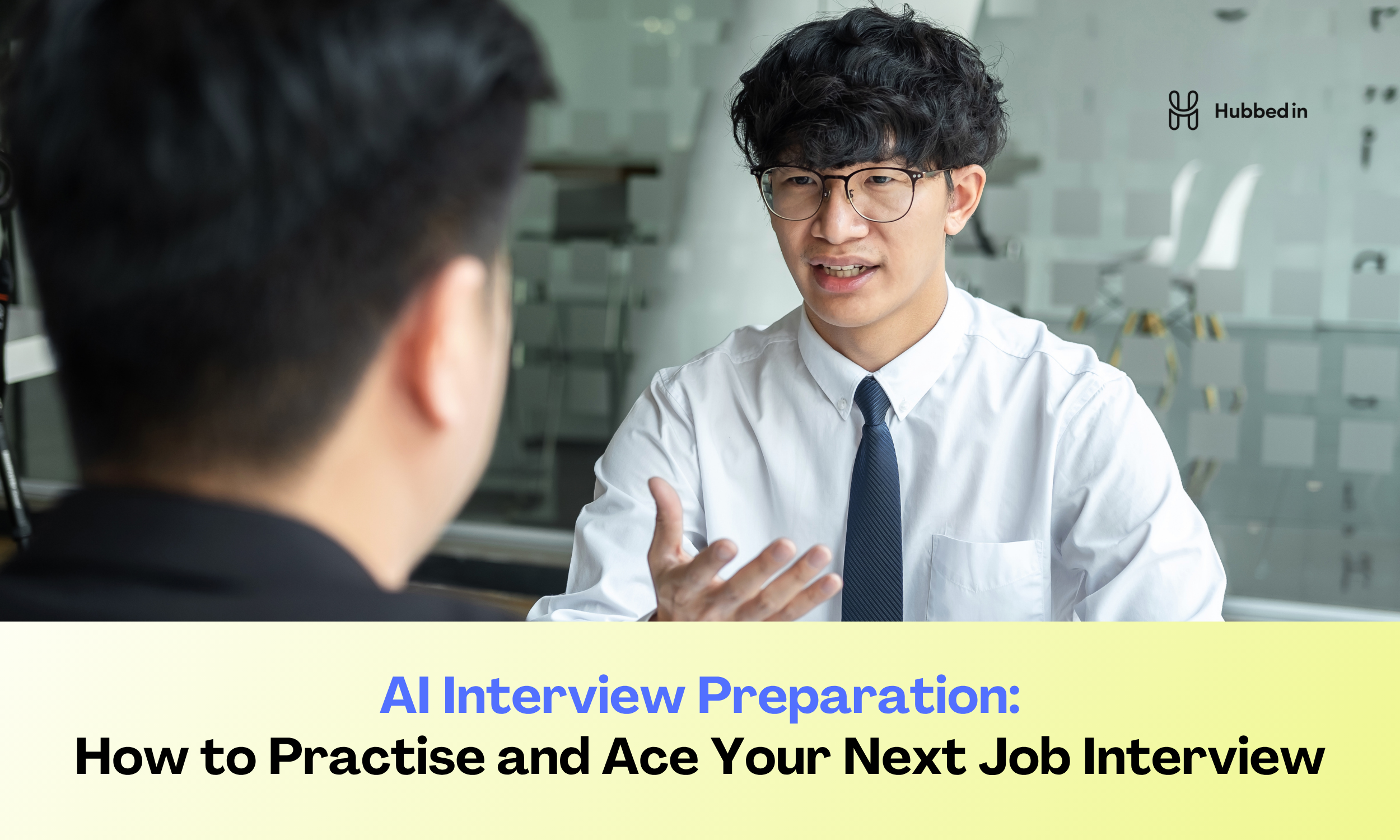
Most people's preparation for a job interview consists of reading the job description, reviewing their resume, looking up common questions, and rehearsing answers in their head or out loud at home. Very few do anything that remotely resembles the actual conditions of an interview.
That gap between preparation and reality is part of why interview nerves are so common, and why candidates who are genuinely qualified for a role can still underperform when it matters. The discomfort is rarely about not knowing the answers. It is about being asked to think clearly, speak concisely, and project confidence under pressure, often in front of someone you are meeting for the first time. That is a skill, and like any skill, it improves with deliberate practice.
AI interview preparation tools have changed what deliberate practice looks like. Job seekers can now simulate realistic interview conditions at any time, receive specific feedback on their answers, and build genuine familiarity with the format without needing to coordinate with another person.
Why Practice Quality Matters More Than Practice Volume
There is a common misconception that interview preparation is mainly about memorising answers to common questions. The reality is that memorised answers tend to perform poorly under real interview conditions, because they sound rehearsed and fall apart when the interviewer asks an unexpected follow-up. What you actually need is fluency: the ability to retrieve relevant examples, structure them clearly, and adapt them to whatever is asked.
Fluency comes from feedback-informed practice, not repetition alone. Saying the same answer twenty times in the mirror will not improve it the way a single round of practice that identifies a missing outcome will. Feedback is the mechanism through which improvement happens, and it is exactly what most traditional preparation methods are missing.
How AI Interview Practice Works
AI interview tools simulate the interview experience by presenting questions in sequence, analysing your responses, and generating feedback on specific dimensions: answer structure, relevance to the question, clarity, and depth of the example used.
The practical workflow is straightforward. You select the type of interview you are preparing for, whether behavioural, competency-based, technical, or sector-specific. The AI presents questions in the format typical of that interview type. You answer in real time, either by typing or speaking. The system analyses your response and provides structured feedback on what you did well, what was missing, and how the answer could improve.
CareerLab's AI Interviewer goes further by allowing you to practise with role-specific question sets. If you are applying for a marketing role, the question bank draws from marketing interview patterns. If you are applying in finance or technology, the questions shift accordingly. This contextual specificity makes the practice significantly more transferable to the actual interview than working through a generic list of common questions.
The STAR Method: Still the Gold Standard
For behavioural and competency-based questions, the type that begin with “Tell me about a time when…”, the STAR method remains the most reliable framework. STAR stands for Situation, Task, Action, Result. The structure works because it forces you to anchor your answer in a specific example rather than speaking in generalities.
AI interview tools are particularly effective at reinforcing STAR because they can identify when an answer is missing one of the four components. A common failure mode is to describe the situation and task in detail, rush through the action, and neglect the result entirely, leaving the interviewer with no sense of whether the effort actually worked. Practising with feedback helps you correct that pattern before it costs you in a real interview.
The framework is widely taught for good reason. NACE's career readiness competencies specifically point to structured self-reflection and clear communication as core employability skills, both of which STAR is designed to demonstrate.
Building Confidence Before the Real Thing
Beyond the technical improvement in answer quality, AI interview practice has a psychological benefit that is easy to underestimate. Familiarity reduces anxiety. When you have answered thirty interview questions in a simulated environment, the format is no longer unfamiliar when you are sitting across from a hiring manager. The cognitive load of the situation itself becomes lower, which frees up mental capacity for actually thinking well.
Use CareerLab's AI Interviewer to simulate your specific interview, get feedback, iterate, and walk in more prepared than candidates who only practised in a mirror.
Your next interview is a skill performance, and skills improve with practice. Try CareerLab's AI Interviewer and get the feedback you need to perform at your best when it counts.